
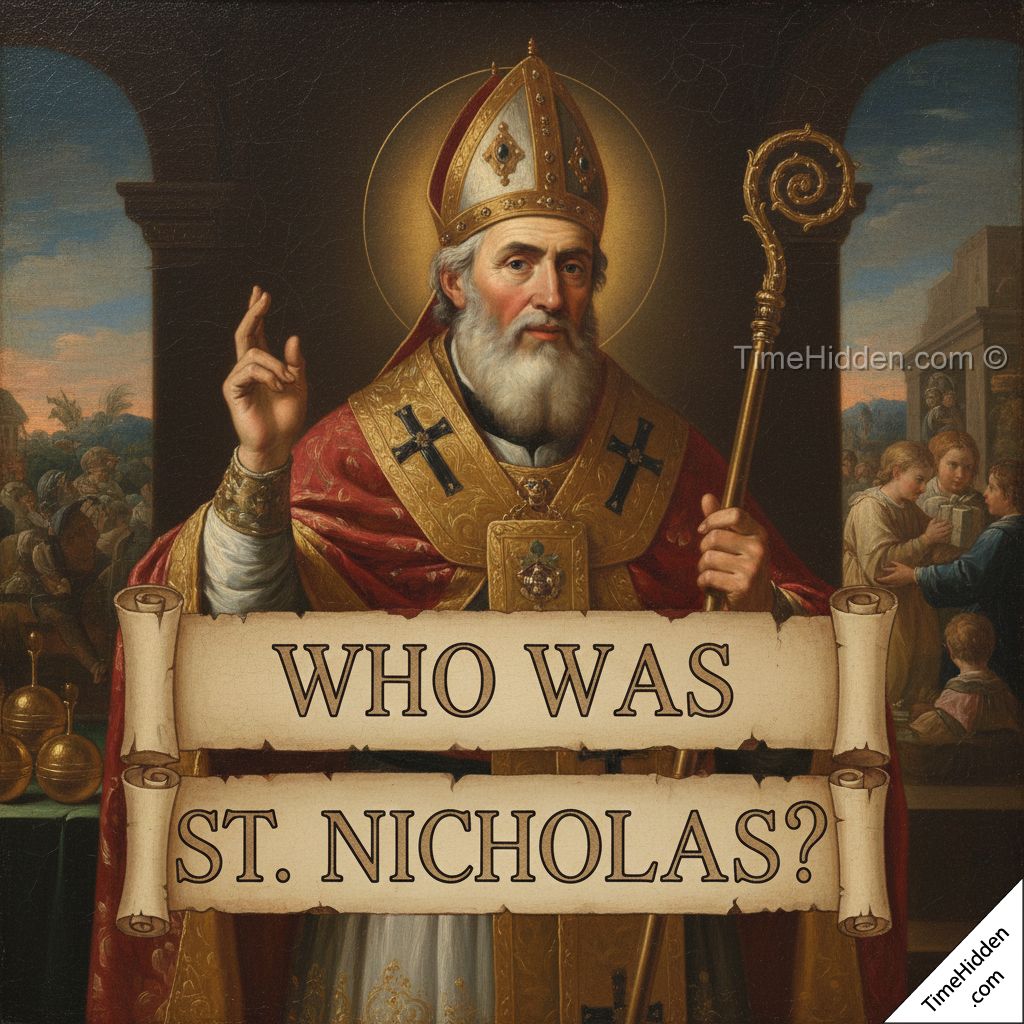
Who Was St. Nicholas?
St. Nicholas is one of the most influential and beloved figures in Christian history, remembered for his generosity, kindness, and the legends that eventually inspired the modern-day character of Santa Claus. Although he lived more than 1,600 years ago, his story continues to shape traditions, celebrations, and cultural folklore around the world.
Early Life
St. Nicholas was born around AD 270 in the ancient city of Patara in Lycia, a region located in modern-day Turkey. He grew up in a Christian family that was both wealthy and deeply devoted to helping the poor.
Tragically, his parents died during a widespread illness when Nicholas was still a young man. After inheriting their fortune, he chose not to use it for himself but instead dedicated his wealth to helping the needy, the sick, and the vulnerable.
Even in his youth, Nicholas was admired for his humility, compassion, and spiritual devotion—qualities that would later define his legacy.
Rise to Bishop of Myra
Nicholas eventually moved to Myra, where he became a priest. His reputation for kindness and wisdom grew quickly, and he was later chosen as the Bishop of Myra. This made him a highly respected religious leader in the region.
As bishop, Nicholas became known not only for his charitable acts but also for his courage. During the persecution of Christians under Emperor Diocletian, he was reportedly imprisoned for defending his faith. When the persecution ended, Nicholas returned to his duties and continued serving the people with unwavering dedication.
Famous Legends and Acts of Kindness
Many legends about St. Nicholas highlight his generosity and his concern for justice. Among the most famous are:
1. The Three Poor Sisters
One of the best-known stories tells of a poor father with three daughters who had no dowries, meaning they could not marry and faced a life of hardship.
Nicholas, wanting to help secretly, is said to have thrown bags of gold through their window at night—providing dowries for each daughter.
This story became the basis for the tradition of gift-giving at Christmas.
2. Protecting the Innocent
Nicholas was also known as a defender of justice. In one tale, he intervened to stop the execution of three innocent men who had been falsely accused.
This earned him the reputation of being a protector of the weak and oppressed.
3. The Miracle of the Sailors
Another legend describes how Nicholas miraculously calmed a storm at sea to save a group of sailors. This led to him being honored as the patron saint of sailors and travelers.
Death and Legacy
St. Nicholas died on December 6, around AD 343. His tomb in Myra soon became a pilgrimage site, attracting visitors from many parts of the world who came to honor his memory.
Over the centuries, devotion to St. Nicholas spread across Europe. He became the patron saint of:
-
Children
-
Sailors
-
Merchants
-
The poor
-
Those in need of protection
December 6, known as St. Nicholas Day, became a celebration where children received small gifts in remembrance of his kindness.
From Saint to Santa Claus
The transformation of St. Nicholas into Santa Claus occurred gradually, especially after Dutch settlers brought the tradition of Sinterklaas to America in the 17th century.
The name “Sinterklaas” eventually evolved into Santa Claus.
By the 19th and 20th centuries, literature, advertising, and popular culture shaped Santa Claus into the red-suited figure known today.
But behind the modern image lies the real story of a humble bishop whose generosity inspired centuries of celebration.
Why St. Nicholas Still Matters Today
St. Nicholas remains important not just as a historical figure, but as a symbol of:
-
Compassion
-
Generosity
-
Justice
-
Faith
His story reminds us that small acts of kindness can create a legacy that lasts for generations.
Whether celebrated as a saint or remembered as the inspiration for Santa Claus, St. Nicholas continues to represent the enduring spirit of goodwill.