
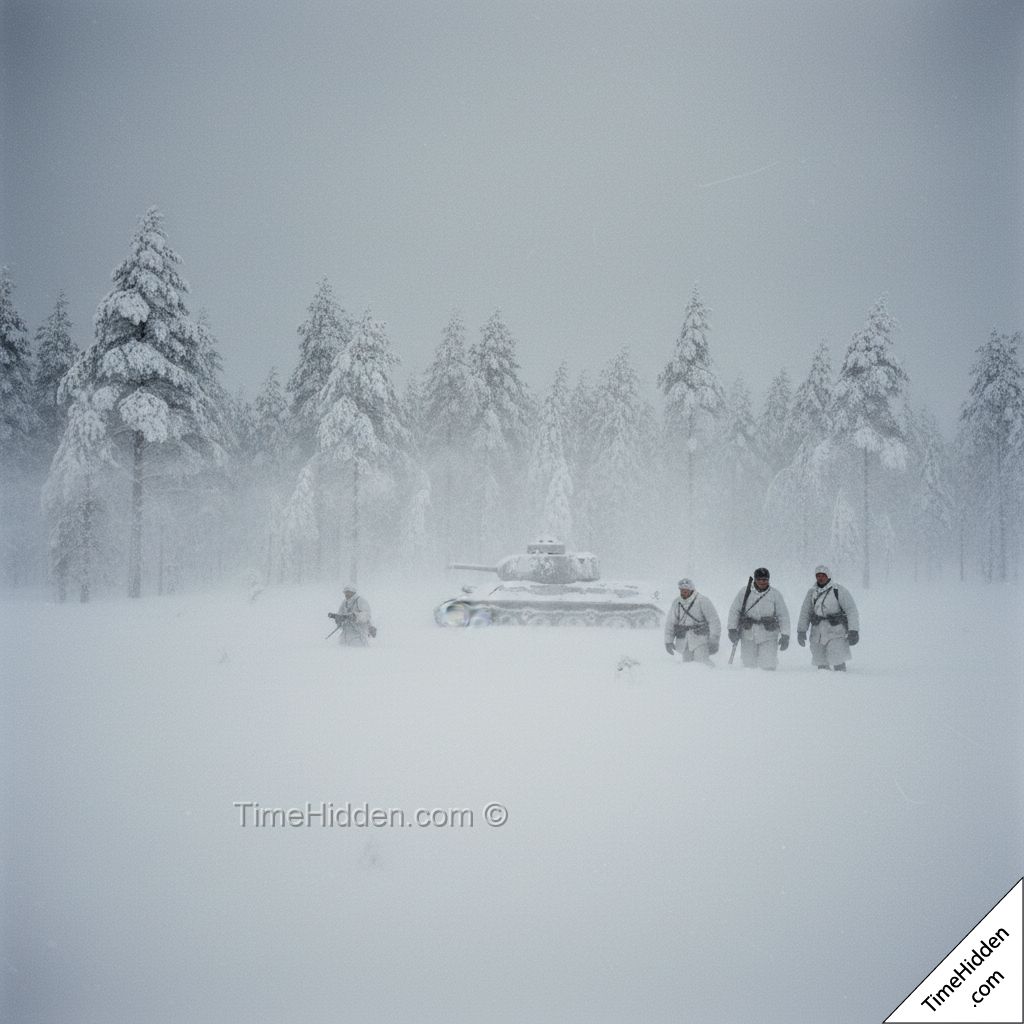
Winter War (1939–1940)
Introduction
The Winter War, fought between the Soviet Union and Finland from November 1939 to March 1940, stands as one of the most dramatic and unlikely military struggles of the 20th century. After the outbreak of World War II, Europe was already engulfed in conflict, but the brutal clash in the Arctic wilderness highlighted the stark contrast between a small democracy defending its homeland and a massive totalitarian superpower seeking territorial expansion. Despite facing overwhelming odds—both in manpower and equipment—the Finnish Army resisted the Red Army with ingenuity, mobility, and determination. The war revealed the importance of morale, leadership, and knowledge of terrain, while exposing severe weaknesses in Soviet military organization after Stalin’s purges. Although Finland eventually agreed to cede substantial territory in the Moscow Peace Treaty, its fierce resistance earned worldwide admiration. The Winter War became a testament to national unity, the impact of geography on warfare, and the astonishing resilience of a people fighting for survival.
Historical Background
Europe Before the War
The geopolitical situation in Europe deteriorated rapidly during the late 1930s. Adolf Hitler’s Germany expanded aggressively, prompting Western nations to reconsider their defense strategies. Meanwhile, Joseph Stalin’s Soviet Union was equally ambitious. The signing of the Molotov–Ribbentrop Pact in August 1939 shocked the world, as it secretly divided Eastern Europe into spheres of influence between Germany and the USSR. Finland, formerly part of the Russian Empire before its independence in 1917, fell within the Soviet sphere.
Soviet Concerns and Territorial Demands
The Soviet Union sought to secure Leningrad, which lay only 32 kilometers from the Finnish border. Stalin demanded territorial exchanges: the Finns were to cede land on the Karelian Isthmus and lease strategic islands in the Gulf of Finland. In return, the USSR offered larger but less valuable areas of eastern Karelia. Finland, valuing sovereignty and suspicious of Soviet motives, rejected these proposals.
Collapse of Negotiations
Negotiations in Moscow failed by November 1939. The Finnish government refused to make concessions that would compromise national security. The Soviet Union, interpreting the refusal as defiance, prepared for military action. On November 26, 1939, the USSR staged the Shelling of Mainila—an alleged artillery attack attributed to Finnish forces, widely believed to be a Soviet false-flag operation. Stalin used this incident as a pretext for war.
Outbreak of Hostilities
On November 30, 1939, the Soviet Red Army invaded Finland along a front over 1,300 kilometers long. The League of Nations condemned the attack and expelled the USSR from the organization. Despite widespread international sympathy, Finland received little material support. The stage was set for a brutal winter conflict.
Main Events
Timeline Overview
-
November 30, 1939: Soviet Union invades Finland.
-
December 1939: Finnish “Motti” tactics halt multiple Red Army offensives.
-
December 31, 1939: Battle of Suomussalmi begins.
-
January 1940: Major Finnish victories in northeast Finland.
-
February 1940: Soviets launch large-scale assault on the Karelian Isthmus.
-
March 13, 1940: Moscow Peace Treaty ends the war.
Soviet Invasion (November–December 1939)
The Soviet invasion began with massive artillery barrages and air raids targeting Helsinki and other major cities. Expecting a quick victory, Stalin deployed over 450,000 men in the first wave, supported by thousands of tanks and aircraft. The Red Army, however, encountered fierce resistance.
Finnish troops, numbering roughly 300,000 throughout the war, were outgunned and outnumbered, but they possessed high morale and intimate knowledge of the terrain. Temperatures plunged as low as -40°C. The extreme cold, combined with dense forests and limited daylight, gave the Finns major tactical advantages.
The Mannerheim Line
The centerpiece of Finnish defenses was the Mannerheim Line on the Karelian Isthmus, named after Marshal Carl Gustaf Emil Mannerheim. It was not a continuous fortress line but a series of strongpoints, trenches, and natural obstacles. The Soviets launched repeated frontal assaults against it in December but suffered heavy casualties due to poor leadership and inadequate winter equipment.
The Rise of “Motti” Tactics
In the northern sectors, where the landscape was dominated by forests and narrow roads, Finnish commanders employed “Motti” tactics—encircling isolated Soviet columns and cutting them into smaller pockets. Soviet troops, poorly dressed and unable to maneuver off-road, became easy targets.
Ski troops were crucial. Finnish soldiers glided across snow-covered terrain, moving silently and quickly. They raided Soviet supply lines, ambushed columns, and used camouflage effectively. The Finns transformed the harsh environment into a weapon.
Battle of Suomussalmi (December 1939 – January 1940)
One of Finland’s greatest victories occurred at Suomussalmi. Two Soviet divisions attempted to advance through the wilderness to cut Finland in half. Colonel Hjalmar Siilasvuo’s Finnish forces encircled the Soviet units, destroyed their supplies, and isolated them on frozen lakes and roads.
By early January 1940, the Red Army suffered catastrophic losses: over 17,000 casualties and massive equipment destruction. The Finnish victory astonished military observers worldwide and exposed Soviet vulnerabilities.
Soviet Reorganization and Renewed Offensive (January–February 1940)
Recognizing the severity of the situation, the Soviet command reorganized its forces. Stalin replaced several incompetent generals and improved coordination between infantry, armor, and artillery. Supply lines were strengthened, and troops were better equipped for winter combat.
In February 1940, the Red Army launched massive offensives on the Karelian Isthmus. Using overwhelming artillery firepower—nearly 300,000 shells per day in some sectors—the Soviets finally broke through the Mannerheim Line. Though the Finns mounted desperate counterattacks, their ammunition, manpower, and resources were nearly exhausted.
Fall of Viipuri and Final Battles (February–March 1940)
The city of Viipuri (Vyborg), Finland’s second-largest city, became the next major objective. By late February, Soviet troops advanced through breached lines and threatened to encircle large Finnish formations. The Finnish Army was on the brink of collapse.
Despite heroic resistance, including women from the Lotta Svärd organization helping with logistics and medical care, Finland recognized that further fighting would risk national destruction. Diplomatic pressure increased, and negotiations began.
The Moscow Peace Treaty (March 13, 1940)
Finland accepted harsh terms to end the war. Under the treaty:
-
It ceded the Karelian Isthmus, including Viipuri.
-
It surrendered territory in northern Karelia.
-
It granted the USSR control of the northern shore of Lake Ladoga.
-
It leased the Hanko Peninsula for use as a Soviet naval base.
Over 400,000 Finnish civilians were forced to evacuate their homes—nearly 12 percent of Finland’s population.
Though Finland survived as an independent nation, the territorial losses were severe.
Key Figures
Carl Gustaf Emil Mannerheim
Commander-in-Chief of the Finnish Armed Forces, Mannerheim’s strategic leadership and ability to inspire unity were crucial. His defensive strategies delayed Soviet advances and maximized Finnish strengths.
Joseph Stalin
Leader of the Soviet Union. Stalin’s goals included securing Leningrad and expanding Soviet influence. His military purges contributed to early Red Army failures.
Kliment Voroshilov
Originally in charge of Soviet operations, Voroshilov proved ineffective and was replaced after heavy casualties. His failures highlighted internal problems within the Soviet command.
Semyon Timoshenko
Timoshenko took over Soviet operations in January 1940 and implemented changes that eventually enabled the Red Army to break Finnish defenses.
Hjalmar Siilasvuo
The Finnish commander responsible for victories at Suomussalmi and Raate Road. His use of Motti tactics became legendary.
Simo Häyhä
A Finnish sniper known as the “White Death,” credited with over 500 confirmed kills. His impact on morale and Soviet troop movements was substantial.
Significance and Impact
Global Reaction and Admiration for Finland
The Winter War captured global attention. Small Finland’s resistance against one of the world’s largest armies generated admiration. Volunteers from Sweden, Norway, Denmark, and 26 other countries attempted to join the fight. Even the Western Allies considered launching an expeditionary force, though it never materialized.
Exposure of Soviet Weaknesses
The war revealed deep flaws within the Red Army—poor leadership, insufficient training, logistical failures, and the consequences of Stalin’s purges. These weaknesses influenced Adolf Hitler’s decision to invade the Soviet Union in 1941, believing it to be an easy target.
Military Lessons
The Winter War demonstrated:
-
The importance of mastering harsh environments
-
The value of mobility, especially ski troops
-
The power of decentralized tactics
-
The inadequacy of traditional mass assaults in modern warfare
These lessons were studied by militaries worldwide.
Finnish Resolve and National Unity
The war strengthened Finnish national identity. The unity shown by civilians, soldiers, and political leaders laid the foundation for Finland’s later survival during the Continuation War (1941–1944).
Long-Term Geopolitical Impact
Although Finland lost territory, it remained independent—a remarkable outcome considering the imbalance of power. The Soviet Union’s reputation suffered internationally, and its expulsion from the League of Nations underscored global condemnation.
Conclusion
The Winter War remains one of the most extraordinary conflicts of the Second World War. Finland’s determination, tactical brilliance, and intimate knowledge of its environment allowed it to resist a vastly superior opponent for over three months. Although the war ended with territorial concessions, Finland preserved its sovereignty and emerged with its national spirit intact. The conflict exposed significant Soviet military weaknesses and influenced global perceptions of both nations. Above all, the Winter War stands as a testament to courage, unity, and the ability of a small nation to challenge overwhelming force in defense of its homeland.