
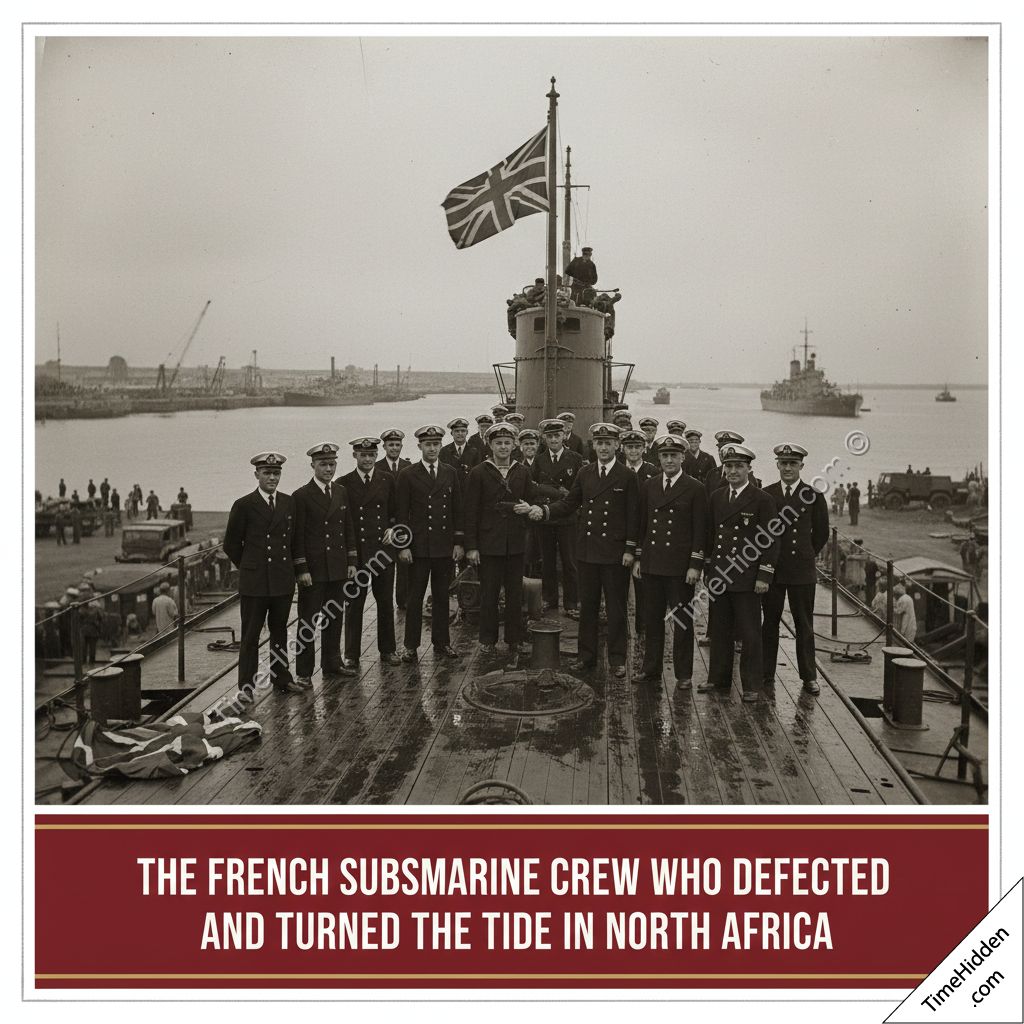
It was the summer of 1942. The Mediterranean Sea, a boiling battlefield, stretched between Axis-controlled North Africa and Allied forces desperate to turn the tide. French naval forces, divided between Vichy loyalty and the Free French cause, patrolled these waters under constant threat of attack. Among them, the submarine Le Casque carried a crew whose hearts were torn between duty and conscience. Every dive, every patrol, was a dance with death. German U-boats prowled the deep, Italian destroyers patrolled the straits, and the fate of entire convoys hung in the balance.
The crew had grown increasingly uneasy. They witnessed Axis convoys supplying Rommel’s Afrika Korps, witnessing how each shipment of tanks, fuel, and ammunition strengthened the enemy. Night after night, they whispered in the shadows of the submarine, sharing a dangerous thought—could they defy orders and change the course of the war? The idea alone was treason. The cost, unimaginable. Yet, the moral weight pressed heavier than any fear of punishment.
Then came the night that would define them. Orders came to intercept a convoy off the coast of Tunisia. But instead of following the Vichy command, the captain made a bold decision. With a trembling voice, he told his crew: “Tonight, we fight for France, not for those who betray her.” Fear, adrenaline, and resolve coursed through every sailor. The engines hummed with purpose as they slipped through darkness, unseen, toward the Axis fleet.
In those tense hours, every ping of the sonar felt like a heartbeat of destiny. They fired torpedoes at the convoys supplying Rommel’s forces. Explosions erupted, shattering the calm of the Mediterranean night. Axis ships burned, supply lines shattered, and the tide of the North African campaign shifted in ways no one aboard could have predicted. For the first time, the crew realized that a single act of courage, a single defiance, could ripple across battlefields, changing the lives of thousands on land and sea.
When dawn broke, the submarine surfaced, marked now as traitors to some, heroes to others. Allied ships received the intelligence the crew had risked everything to transmit, allowing convoys to evade ambushes and Rommel’s supply lines to crumble. The desert armies, once unstoppable, now faced shortages that would eventually halt their advance. And beneath the waves, the men of Le Casque felt an overwhelming mix of fear, relief, and pride—they had risked death to rewrite history.
In the Mediterranean, where every decision could mean life or annihilation, the French submarine crew had shown that courage, conscience, and loyalty to what is right could turn the tide of war. They were no longer just sailors; they were the silent force that changed North Africa forever.